“What’s Not in Your Data?”
— Healthcare, NLP, and Keeping Humans in the Loop, with Prof. Karin Verspoor
From molecular biology to electronic health records, Prof. Karin Verspoor discusses why structured vocabularies still matter in the age of LLMs — and why domain expertise is the one thing AI can’t replace.



Jon Scheele speaks with Professor Karin Verspoor, Executive Dean of Computer Science at RMIT University, about the critical role of language in making sense of healthcare data. Karin traces her journey from cognitive science and NLP research, through an AI startup and Los Alamos National Lab, to healthcare analytics — starting with a colleague’s question about protein function prediction when she didn’t even know what a protein was.
They discuss how structured vocabularies like the Unified Medical Language System (UMLS), SNOMED, and ICD codes provide an anchoring framework for clinical data, why simple dictionary lookup falls short (especially with negation in medical records), and how LLMs are changing the landscape while still lacking domain-specific clinical context.
The conversation explores the balance between generative AI tools and traditional predictive models, and why human oversight and domain expertise remain essential for safe, effective use of AI in healthcare.
Subscribe & Review:
If you found this episode valuable, please subscribe and leave a review on Apple Podcasts, Spotify, or YouTube. It helps other technology leaders discover these conversations.
Key Takeaways
- Karin’s path into healthcare started with a colleague asking her to apply NLP to protein function prediction — she didn’t know what a protein was at the time.
- Scientific literature and clinical records are overwhelmingly expressed in natural language, making NLP essential for extracting structured insights.
- The Unified Medical Language System (UMLS) unifies standards like ICD and SNOMED into a shared framework — and underpins billing systems worldwide.
- Simple dictionary lookup against these vocabularies is a useful starting point, but fails with negation (e.g., “no evidence of infection” being read as “infection”).
- LLMs have shifted clinician attitudes — before ChatGPT, many didn’t see the value of AI tools; now demand outpaces what can be safely deployed.
- AI scribes and documentation tools are among the first clinical adoptions, but rely on doctors manually verifying output — a model that may not scale.
- Generative AI won’t replace traditional predictive and classification models — healthcare will use a mix of approaches for different tasks.
- The key question to ask of any AI system is: “What’s not in your data?” LLMs lack the specific context of individual situations.
- Domain knowledge is what allows humans to critically evaluate AI output — without it, you can’t spot errors.
- Every situation is unique, and that contextual understanding is what humans bring that LLMs currently cannot.
Sound Bites
- “What’s not in your data?”
- “I literally looked at him and said, what’s a protein?”
- "Every situation is unique — and that’s what a human can bring that the LLM doesn’t have access to.”
- “People don’t always use the terminology correctly.”
- “I checked it nine times and it was right… the tenth time, they just tick the box.”
Chapters
00:00 — Introduction
00:54 — Karin’s journey: from cognitive science to NLP
05:25 — “What’s a protein?” — How molecular biology led to healthcare
09:43 — Electronic health records and the unstructured data challenge
11:20 — UMLS, ICD, and SNOMED: structuring medical terminology
14:58 — How organizations large and small use these standards
17:32 — The negation problem: why dictionary lookup isn’t enough
18:48 — Where healthcare analytics is heading in the next 3–5 years
20:33 — Guardrails: preventing AI hallucinations in clinical settings
23:36 — Staying human-in-the-loop: the role of domain knowledge
25:12 — Closing thoughts
See more about the tech of business
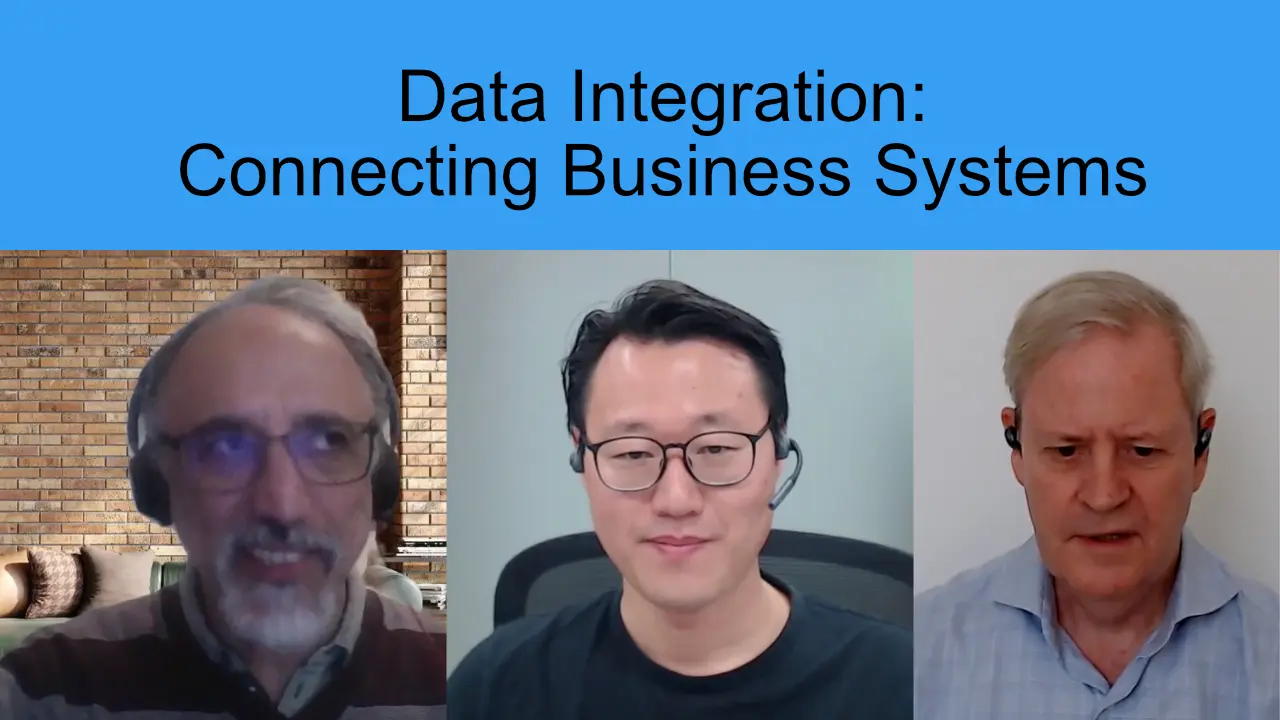
Data Integration: Connecting Business Systems,
with Fethi Rabhi and Alan Hsiao
In this conversation, Jon Scheele, Fethi Rabhi, and Alan Hsiao discuss the complexities of data integration, particularly in the context of e-invoicing. They explore the challenges faced by businesses in automating invoicing processes, the importance of standards like PEPPOL, and the limitations of current systems. The discussion also touches on the future of invoicing, automation, and the potential impact of AI and blockchain technology on business processes.
Data Integration: Connecting Business Systems, with Fethi Rabhi and Alan Hsiao
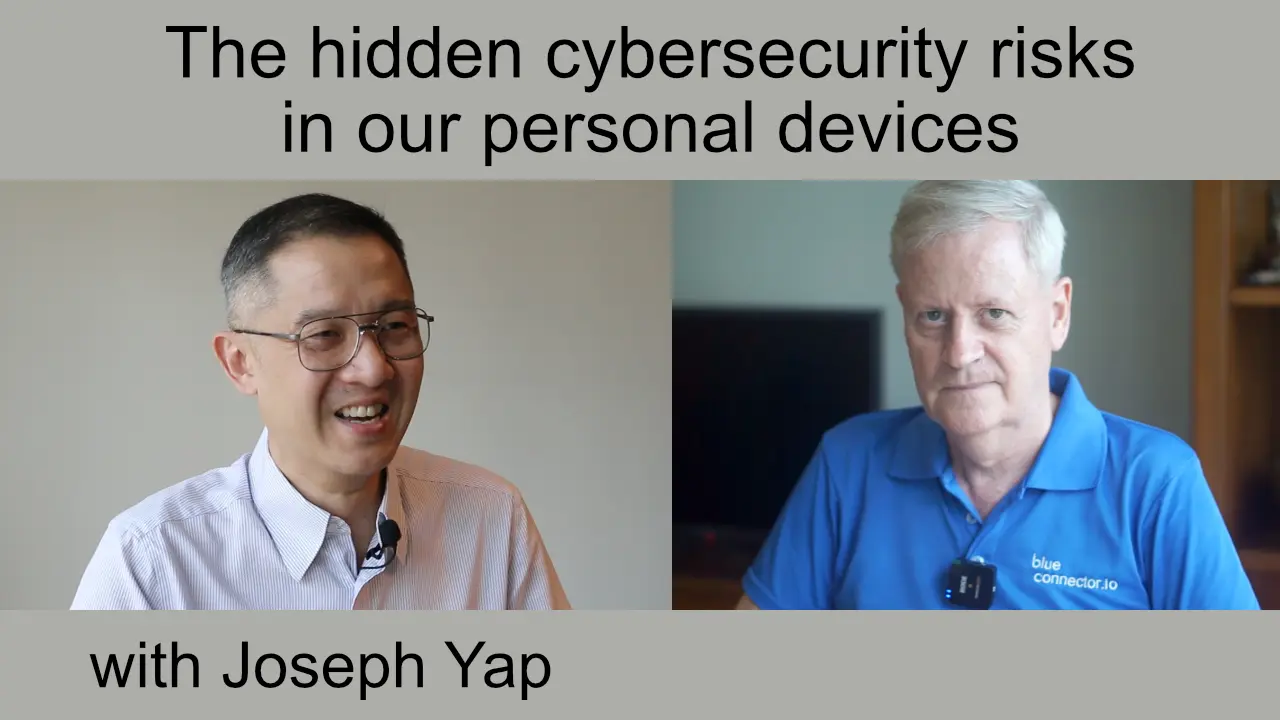
The Hidden Cybersecurity Risks in Our Personal Devices, with Joseph Yap
In this episode, we dive into the world of home automation and the hidden security risks that come with it. Join us as Joseph Yap, a cybersecurity expert, shares his journey from a personal interest in smart homes to uncovering alarming vulnerabilities in everyday devices. Discover how convenience often comes at the cost of security, and learn practical steps to protect your home network from potential threats. Tune in to understand why your smart fridge might be more than just a kitchen appliance and how to safeguard your digital front door.
The Hidden Cybersecurity Risks in Our Personal Devices, with Joseph Yap
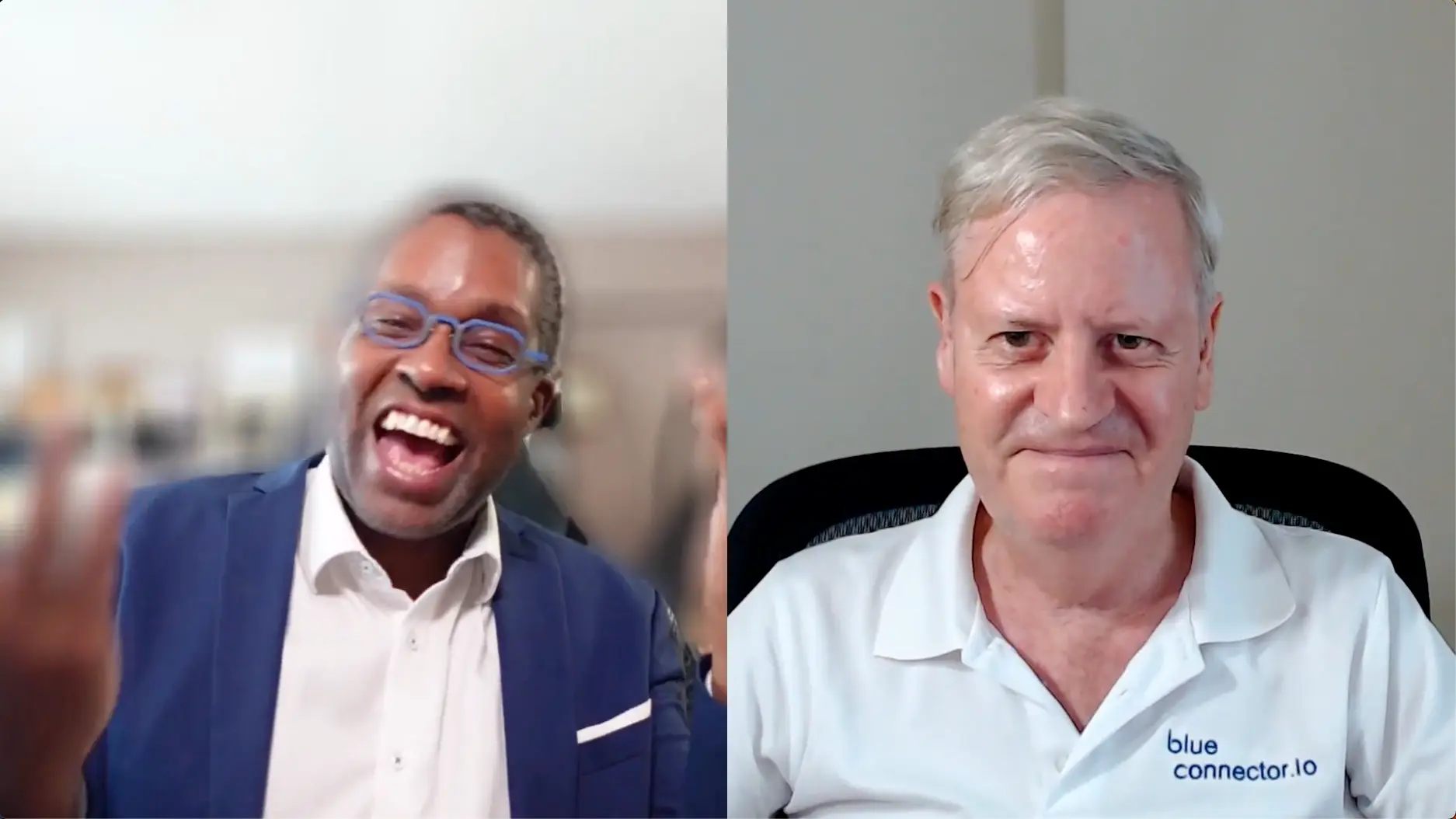
AI's Role in Business Strategy and Customer Experience,
with Keith Carter
In this conversation, Jon Scheele and Keith Carter explore the transformative impact of AI on business strategies, customer experiences, and career development. They discuss how organizations can leverage AI to enhance customer service, anticipate market moves, and foster creativity. Keith emphasizes the importance of actionable intelligence and the human element in AI-driven interactions, while also addressing the need for individuals to adapt and innovate in their careers amidst rapid technological changes.
AI's Role in Business Strategy and Customer Experience, with Keith Carter