AI, Agentic Development, and the Future of Software Engineering
— with Manjunath Bhat, Distinguished VP Analyst, Gartner
Manjunath Bhat leads software engineering research at Gartner and has been one of the most thoughtful voices tracking what AI is actually doing to the way we build software — not just the productivity story, but the structural changes to teams, platforms, and careers. He's a returning keynote speaker at apidays Singapore and apidays Australia.
In this conversation we cover:
- The shift from AI-augmented human work to agent-driven development — and why Manju deliberately avoids calling these tools "peer programmers"
- Why the prototype-to-production gap hasn't closed, and where the real friction still lives
- The hidden downside of vibe coding: when you fully offload to AI, you stop learning too
- How platform engineering is evolving from template-based governance to embedding intelligence directly into the development workflow
- The three mismatches platform teams now have to resolve: speed, determinism, and accountability
- What junior engineers should actually focus on as AI absorbs more entry-level work
- Why Gartner's position is that creativity — not productivity — will be the new measure of engineering excellence
Manju will be delivering a keynote at apidays Singapore, 14–15 April 2026.
Connect with Manju: linkedin.com/in/manjunathbhat
apidays Singapore 2026: https://apidays.global/events/singapore



AI, Agentic Development, and the Future of Software Engineering
Manjunath Bhat has been tracking the intersection of AI and software engineering at Gartner for several years, and I've had the pleasure of hosting him at apidays conferences in both Singapore and Australia. In this conversation we got into something he's been researching closely: not just how AI tools are changing the way developers work day-to-day, but what it means for organisations, for platform engineering teams, and for people building their careers in software.
From assistant to agent
Manju frames the core shift clearly. When tools like GitHub Copilot first arrived, AI was augmenting human work — suggesting a function here, completing a line there. The developer was still firmly in charge. What's changed is that AI has moved from being an assistant to running long-horizon tasks autonomously.
"Software engineering has moved from being human driven but AI augmented, to being now agent driven and human augmented. That is at the core of many of the subsequent shifts we are starting to see."
— Manjunath Bhat, Gartner
He's careful about the language here. He avoids calling these tools 'peer programmers' or 'AI coworkers' — not to undersell their capability, but because those terms carry an assumption of mutual learning that doesn't yet apply. A peer programmer improves through the collaboration. These agents, at least for now, don't demonstrate that kind of continuous learning.
The practical upside is real, though. The cost of experimentation has dropped dramatically. Product owners who previously stopped at wireframes can now see working code. The friction between idea and implementation is lower than it has ever been.
Where the friction still lives
That said, the gap between prototype and production is still very much a human problem. Manju pointed out something I've noticed myself: when you're working with an AI coding assistant, you still need to be the one who knows what good looks like. The assistant won't always notice that a configuration file is exposed in the repository, or that a growing file should be split up, or that a pattern violates your organisation's architecture standards. That expertise has to come from somewhere.
He's also candid about the risks of 'vibe coding' — the practice of just letting the AI generate code without engaging critically with what it's producing.
"With vibe coding, you assume that you don't care about the code — which is why it's really good for building prototypes. But for production-grade software, you do want the human developer to also improve, not just the output."
— Manjunath Bhat, Gartner
The concern is that when you fully offload the work without staying engaged, you stop learning. And because the AI tools aren't continuously learning from the interaction either, there's no virtuous cycle on either side.
What this means for platform engineering
This is where the conversation got particularly interesting for me. Manju sees platform engineering teams as being in a pivotal position right now — and he thinks it's actually a great time to be building a platform, if you're willing to rethink what a platform does.
Historically, the main tool platform teams had was the template. You'd use something like Backstage to give developers a compliant scaffold to spin up a new service — governance baked in through structure. Agentic tools open up something more flexible: the ability to embed governance policies directly into the context of the AI doing the work, whether that's through spec files, markdown instructions, or organisational patterns the agent is expected to follow.
"If you are a platform engineering team or part of the security and risk team, you want your governance policies codified. Specs become a vehicle to improve developer productivity and meet governance needs at the same time."
— Manjunath Bhat, Gartner
He also identifies a few structural tensions that platform teams now have to navigate. There's the speed mismatch between how fast AI can generate code and how fast security review can keep up. There's what he calls an impedance mismatch — we expect deterministic software from tools that are inherently non-deterministic. And there's an accountability mismatch that I think is underappreciated.
"Agents are doing a lot of the work that we would otherwise have done, but we are expected to continue to take accountability even if we have not done the work. That places an enormous burden on us — and we may not be intimately familiar with everything that has gone into building that artifact."
— Manjunath Bhat, Gartner
In his view, the platform team becomes the translation layer that makes autonomous developer tooling compatible with the organisation's actual risk and cost constraints. That's a significant expansion of the role — and one that most platform teams are still working out how to meet.
What it means for your career
Manju and I both have children starting university right now, which makes the career question feel fairly personal. Some organisations have already started reducing junior developer headcount on the basis that senior engineers, with AI assistance, can simply get more done. The entry-level work that used to build experience is, in some places, disappearing.
His view is grounded but honest. Fundamentals still matter — probably more than ever, because AI-generated code doesn't enforce good architecture, security thinking, or resilience patterns on its own. The engineer who understands why systems are designed the way they are will always be able to direct and verify AI output more effectively than one who doesn't.
"The need for fundamental understanding of how software is engineered is not going to go away. Whether it is architecture, design, security, reliability — those become increasingly important, not less important."
— Manjunath Bhat, Gartner
He also makes the point that the current distinction between 'software engineer' and 'AI engineer' is temporary. In a few years, every software engineering role will implicitly carry AI engineering expectations. If you're studying now, that's the workforce you're entering.
But the most resonant point he makes is about what will actually be valued — and it's not raw productivity.
"What we will really get paid for will be our executive functions — curiosity, critical thinking, creativity. It is creativity and not productivity that is going to be the yardstick for measuring engineering excellence."
— Manjunath Bhat, Gartner
That framing feels right to me. The ability to execute code is becoming less scarce. The ability to ask the right question, spot the wrong direction early, or imagine something genuinely new — that's where the value is moving.
Manjunath Bhat is Distinguished VP Analyst at Gartner. He will be delivering a keynote at apidays Singapore, 14–15 April 2026.
Subscribe & Review:
If you found this episode valuable, please subscribe and leave a review on Apple Podcasts, Spotify, or YouTube. It helps other technology leaders discover these conversations.
See more about the tech of business
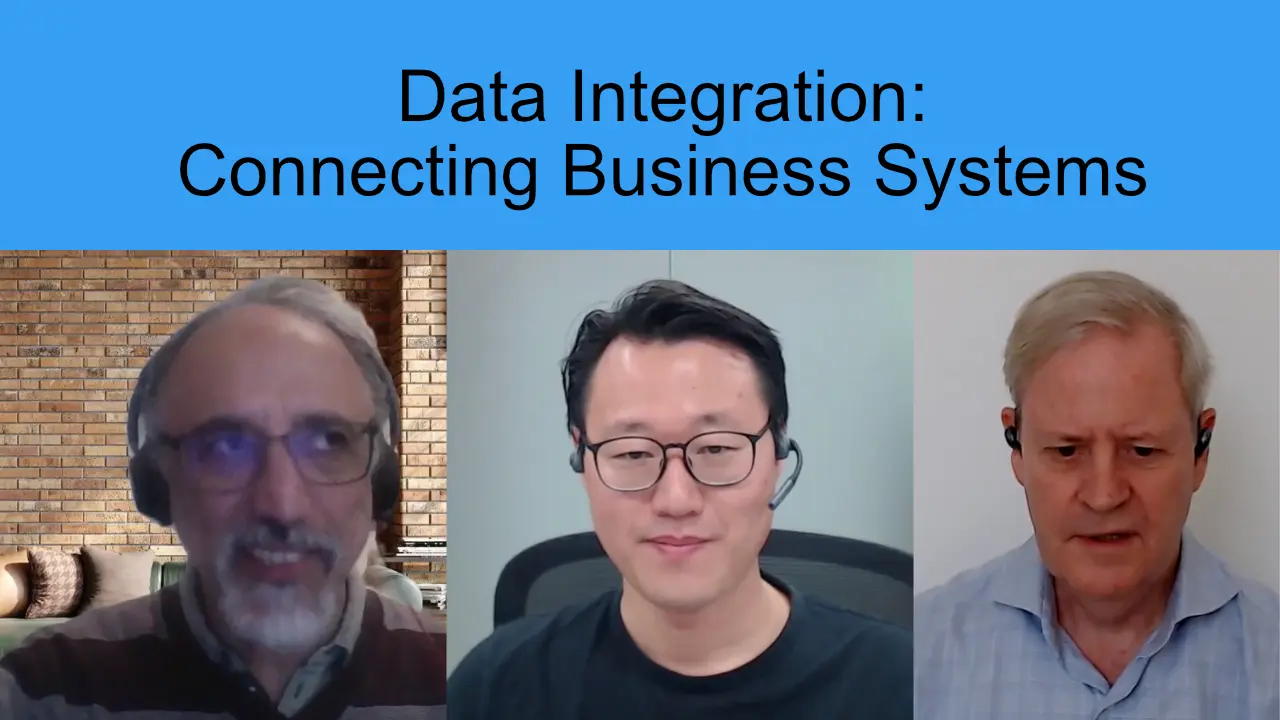
Data Integration: Connecting Business Systems,
with Fethi Rabhi and Alan Hsiao
In this conversation, Jon Scheele, Fethi Rabhi, and Alan Hsiao discuss the complexities of data integration, particularly in the context of e-invoicing. They explore the challenges faced by businesses in automating invoicing processes, the importance of standards like PEPPOL, and the limitations of current systems. The discussion also touches on the future of invoicing, automation, and the potential impact of AI and blockchain technology on business processes.
Data Integration: Connecting Business Systems, with Fethi Rabhi and Alan Hsiao
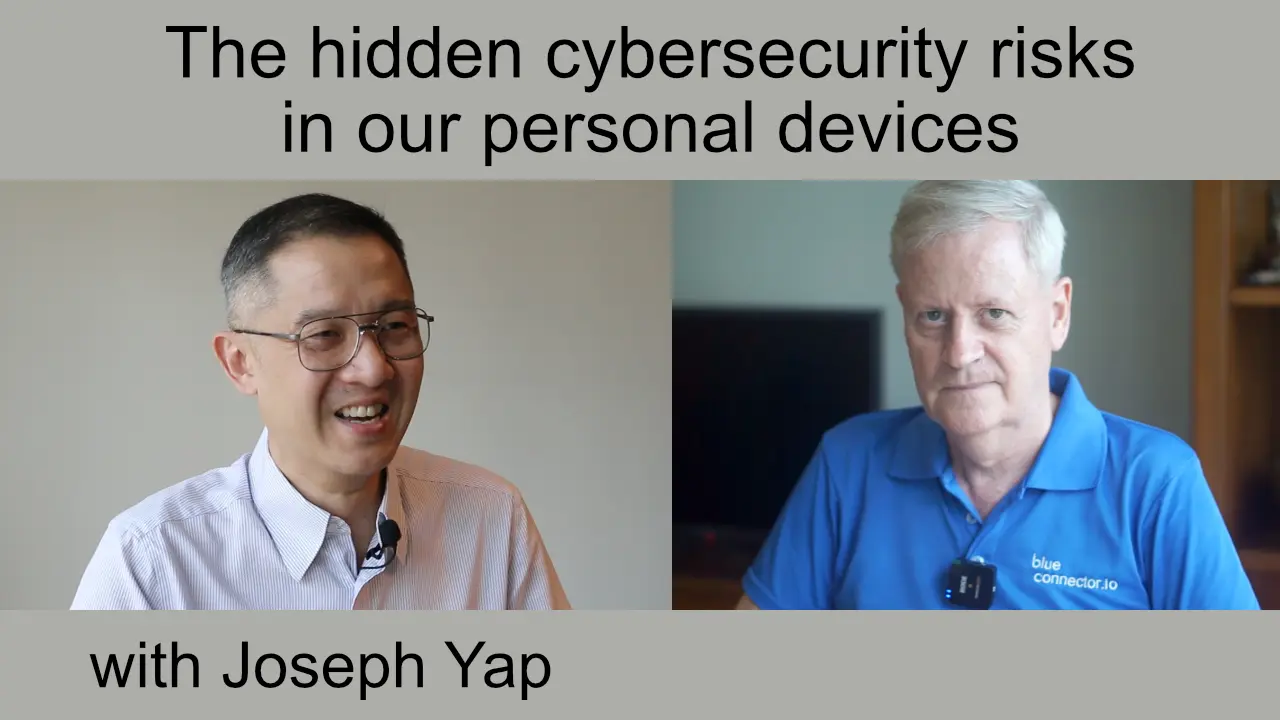
The Hidden Cybersecurity Risks in Our Personal Devices, with Joseph Yap
In this episode, we dive into the world of home automation and the hidden security risks that come with it. Join us as Joseph Yap, a cybersecurity expert, shares his journey from a personal interest in smart homes to uncovering alarming vulnerabilities in everyday devices. Discover how convenience often comes at the cost of security, and learn practical steps to protect your home network from potential threats. Tune in to understand why your smart fridge might be more than just a kitchen appliance and how to safeguard your digital front door.
The Hidden Cybersecurity Risks in Our Personal Devices, with Joseph Yap

AI's Role in Business Strategy and Customer Experience,
with Keith Carter
In this conversation, Jon Scheele and Keith Carter explore the transformative impact of AI on business strategies, customer experiences, and career development. They discuss how organizations can leverage AI to enhance customer service, anticipate market moves, and foster creativity. Keith emphasizes the importance of actionable intelligence and the human element in AI-driven interactions, while also addressing the need for individuals to adapt and innovate in their careers amidst rapid technological changes.
AI's Role in Business Strategy and Customer Experience, with Keith Carter