The AI Triangle: Why Most Enterprise AI Programmes Fail — and How to Fix Them
— with Sutowo Wong, Managing Director, AI x Data at Temus
Sutowo Wong is Managing Director, AI x Data at Temus, Temasek's AI and digital transformation firm, where he leads enterprise AI delivery across Singapore's public sector and private markets. Before joining Temus, he spent a decade at Singapore's Ministry of Health building deep expertise in healthcare data — one of the most complex and regulated data environments in the region. He is the originator of the AI Triangle framework, which defines the three conditions any enterprise AI programme must satisfy simultaneously to deliver real transformation: transformative, sovereign, and fast.
Sutowo Wong, Managing Director, AI x Data at Temus, has a framework that cuts through the noise of enterprise AI transformation. It has three vertices. Most organisations are only hitting one.
At apidays Singapore 2026, Sutowo Wong walked the audience through a pattern he has seen play out across healthcare, financial services, government and beyond: organisations that invest heavily in AI and arrive, months or years later, with a shelf of proof-of-concepts and very little to show for it. His diagnosis — and the framework he uses at Temus to prevent it — is what he calls the AI Triangle.
The triangle has three corners: Transformative, Sovereign, and Speed. The argument is deceptively simple. You need all three, simultaneously. Nail two and miss the third, and the transformation stalls.



From Ministry of Health to Temasek's AI Engine
Before joining Temus, Sutowo spent a decade at Singapore's Ministry of Health, building deep expertise in healthcare data — one of the richest, most complex, and most sensitive data environments anywhere. He saw first-hand how the same challenges that bedevil healthcare AI — fragmented data, inconsistent definitions, competing stakeholder priorities, high regulatory stakes — show up almost identically in financial services, security, and other regulated industries.
"The safeguards we put around data protection, proper use, who has access for what purposes — that actually works quite well across many other sectors," he told Jon Scheele on The Loop Asia. "The fact that it has to create real sustainable value that moves the needle doesn't change just because it moved from one sector to another."
Temus, fully owned by Temasek, was built to close what Sutowo describes as the strategy-to-execution gap — the moment a strategic advisory engagement concludes and is followed immediately by a far larger implementation quote from the same firm. Temus sits squarely in that execution space, working across both Singapore's public sector and, increasingly, domestic portfolio companies in private markets.
The AI Triangle, Explained
1. Transformative
The first vertex sounds obvious — of course AI should be transformative — but Sutowo's definition is precise. Transformative means reaching production. It means measurable outcomes. It explicitly means not stopping at POC.
"We have to bring it to production. We have to integrate with the other systems. We have to reimagine the workflow. Sometimes, if necessary, changing the job roles."
The POC trap is well-documented but persistently deadly. Sutowo describes a structural reason it happens: teams run pilots in isolated environments to reduce risk, which means they rarely involve all the stakeholders required for genuine scale. In healthcare, that means clinicians, administrators, and technologists must all be present from the outset. Bring only the clinicians and you build something clinically useful that the IT governance framework will reject at integration. Bring only the technologists and you build something architecturally sound that nobody will use.
The lesson generalises. Most organisations that get stuck at POC are not failing because the technology is wrong — they are failing because the wrong people are in the room.
2. Sovereign
Sovereignty in Sutowo's framework has two layers: data sovereignty and contextual sovereignty.
Data sovereignty is the more familiar concern — where does your data go when you make an API call to a frontier model, whose servers hold it, and what commercial or contractual protections actually mean in practice for classified or confidential data. For much of Singapore's public sector, standard API arrangements with frontier labs are simply not adequate, regardless of what the contract says.
Contextual sovereignty is the deeper point. Every organisation has existing infrastructure, existing investments, in-flight projects already approved and awaiting execution. An AI solution that ignores those realities — that assumes a greenfield rip-and-replace — is not sovereign to the organisation. It is imposed upon it.
"Being able to contextualize the AI solution to the reality of the architecture and infrastructure it is going to sit on is very important. If the people are not ready, you are not actually ready to take advantage of AI — and it's not sovereign to you because it is imposed upon you and you are not able to carry on later on on your own."
The practical implication: Temus works backwards from the organisation's actual architecture, business context, and stakeholder readiness — not from what an ideal-state deployment would look like if starting from scratch.
3. Speed
The third vertex is the one most enterprise programmes sacrifice in pursuit of thoroughness. Sutowo is direct about why this is fatal.
"Gone are the days where we can spend years on a transformation project. The AI models are coming out every few months. Enterprise deployment cycles are usually measured in years. That disconnect in tempo is one of the reasons why many initiatives are not successful."
The Temus benchmark: prototype in six hours, live deployment in six to twelve weeks. Against the backdrop of three-to-five year transformation programmes that arrive to find the world has moved on, this is not just faster — it is a qualitatively different model of how AI delivery should work.
The value gap between what AI could be delivering and what organisations are actually realising is, by Sutowo's assessment, substantial. Closing it requires operating at a tempo closer to the pace of model releases — not the pace of enterprise procurement cycles.
Who Drives AI Transformation? The CEO Argument
One of the most pointed claims in Sutowo's talk is that AI transformation cannot be successfully delegated to a Chief AI Officer. Not because the role is unimportant, but because the leverage does not exist at that level.
"To achieve transformation, you need to reimagine a workflow and redesign job roles. Workflow requires the different business unit leads — who report to the CEO. They don't report to the Chief AI Officer."
The structural logic is sound. Genuine AI transformation requires deconstructing every workflow into three buckets: tasks done entirely by AI autonomously; tasks done by humans without AI assistance; and tasks done by humans with AI support. Reconstructing those workflows to maximise autonomous throughput, and then focusing enablement and training on the human-assisted bucket, inevitably involves HR, BU leads, and changes to job descriptions. That is CEO-level authority territory.
"When the CEO says, 'I am going to lead this transformation,' the chances of success are a lot higher. People know the CEO is watching, and they move at higher speed."
Governance as Accelerator, Not Speed Bump
Sutowo's closing point on governance deserves attention precisely because it inverts the default assumption.
The widespread perception is that governance is what slows AI projects down. Sutowo's counterargument: what slows projects down is not governance itself — it is the absence of clarity about what is and is not permitted.
"When you know there is a brake in the car, you are more willing to drive faster. AI governance is an accelerator. The key is having clarity."
The second point is architectural. Governance bolted on at the end of a deployment — as a compliance layer applied after the fact — is neither sufficient nor particularly effective. It needs to be baked into the design and into the architecture from the beginning. This is a direct parallel to the security-by-design principle that has reshaped software engineering over the past decade: shift left on governance, not just on security.
Context: Singapore's AI Moment
Sutowo spoke at apidays Singapore 2026 against a backdrop of significant national momentum. Singapore's AI push under Prime Minister Wong — including the Champions of AI programme and the planned AI park at One North — has created genuine tailwinds for enterprise adoption that Temus is well-positioned to capitalise on.
The client examples Sutowo shared at apidays ranged across sectors: a genomics lab processing pipeline, personalised health recommendations for HealthierSG through an AI avatar drawing on Ministry of Health data, an insurance-agent training avatar that lifted activation rates from roughly 3–5% to around 10%, grant-proposal evaluation tools, and a cybersecurity agent that ingests Tenable vulnerability scans, contextualises severity, and automatically drafts remediation emails to business stakeholders.
The most provocative example: a client exploring the replacement of entire departments with agent swarms — an initiative Temus was brought in to govern properly at enterprise scale.
His closing advice to practitioners was consistent with the AI Triangle logic: work backwards from your highest-priority use case to identify only the data you actually need. Do not attempt a multi-year data transformation programme before you start. The boiling-the-ocean approach produces the POC trap at the data layer. Start specific, move fast, deliver value, and build from there.
Listen to the Full Conversation
Sutowo Wong is Managing Director, AI x Data at Temus. Connect with Sutowo on LinkedIn.
The Loop Asia is hosted by Jon Scheele and powered by Blue Connector.
theloop.asia
See more about the tech of business
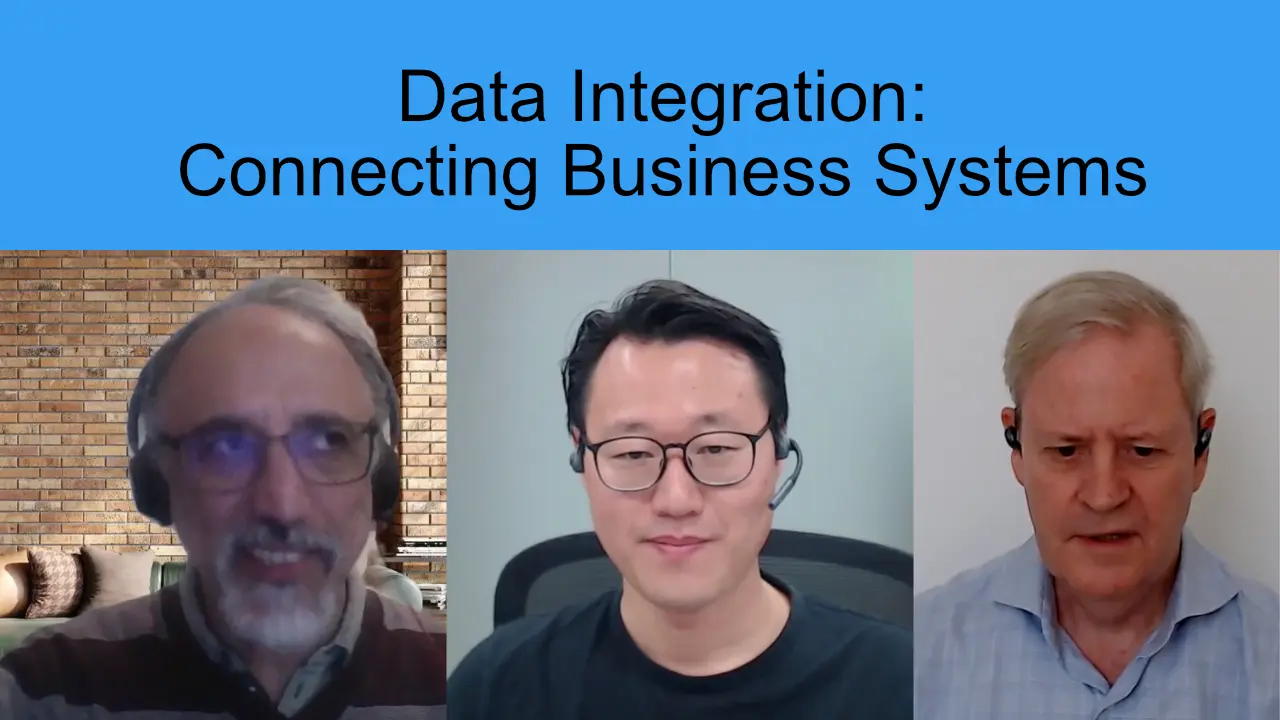
Data Integration: Connecting Business Systems,
with Fethi Rabhi and Alan Hsiao
In this conversation, Jon Scheele, Fethi Rabhi, and Alan Hsiao discuss the complexities of data integration, particularly in the context of e-invoicing. They explore the challenges faced by businesses in automating invoicing processes, the importance of standards like PEPPOL, and the limitations of current systems. The discussion also touches on the future of invoicing, automation, and the potential impact of AI and blockchain technology on business processes.
Data Integration: Connecting Business Systems, with Fethi Rabhi and Alan Hsiao
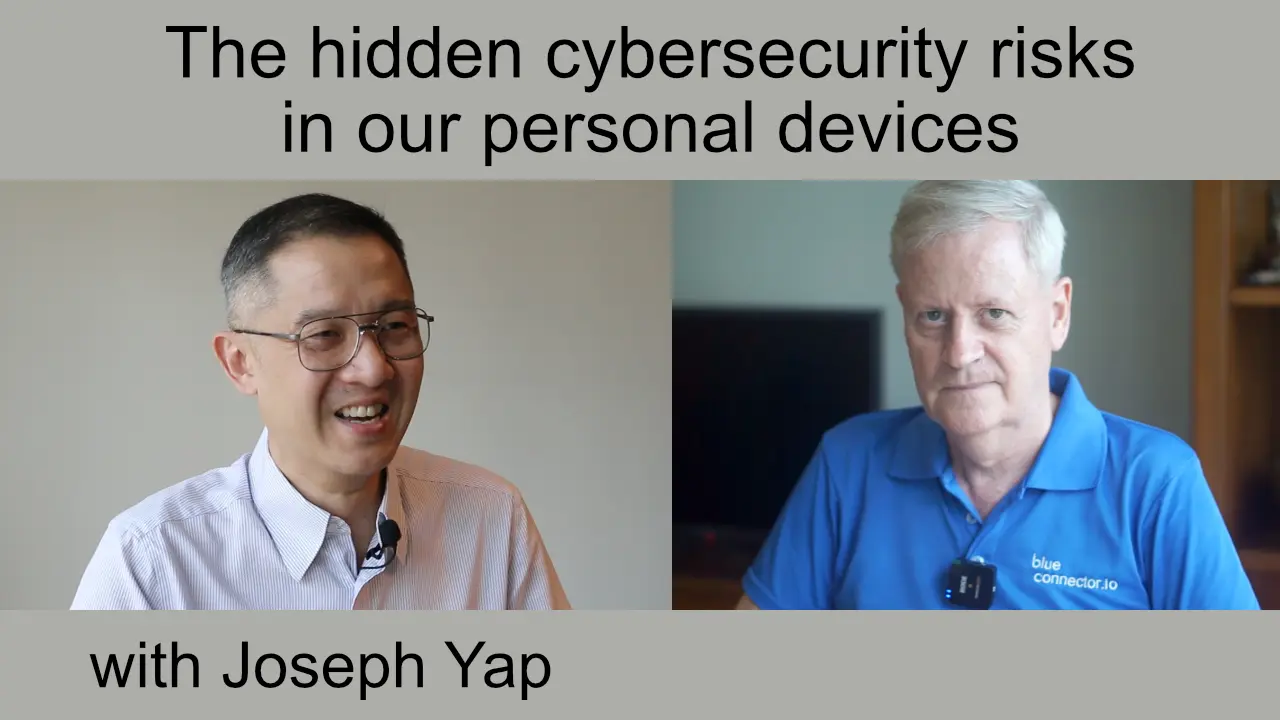
The Hidden Cybersecurity Risks in Our Personal Devices, with Joseph Yap
In this episode, we dive into the world of home automation and the hidden security risks that come with it. Join us as Joseph Yap, a cybersecurity expert, shares his journey from a personal interest in smart homes to uncovering alarming vulnerabilities in everyday devices. Discover how convenience often comes at the cost of security, and learn practical steps to protect your home network from potential threats. Tune in to understand why your smart fridge might be more than just a kitchen appliance and how to safeguard your digital front door.
The Hidden Cybersecurity Risks in Our Personal Devices, with Joseph Yap
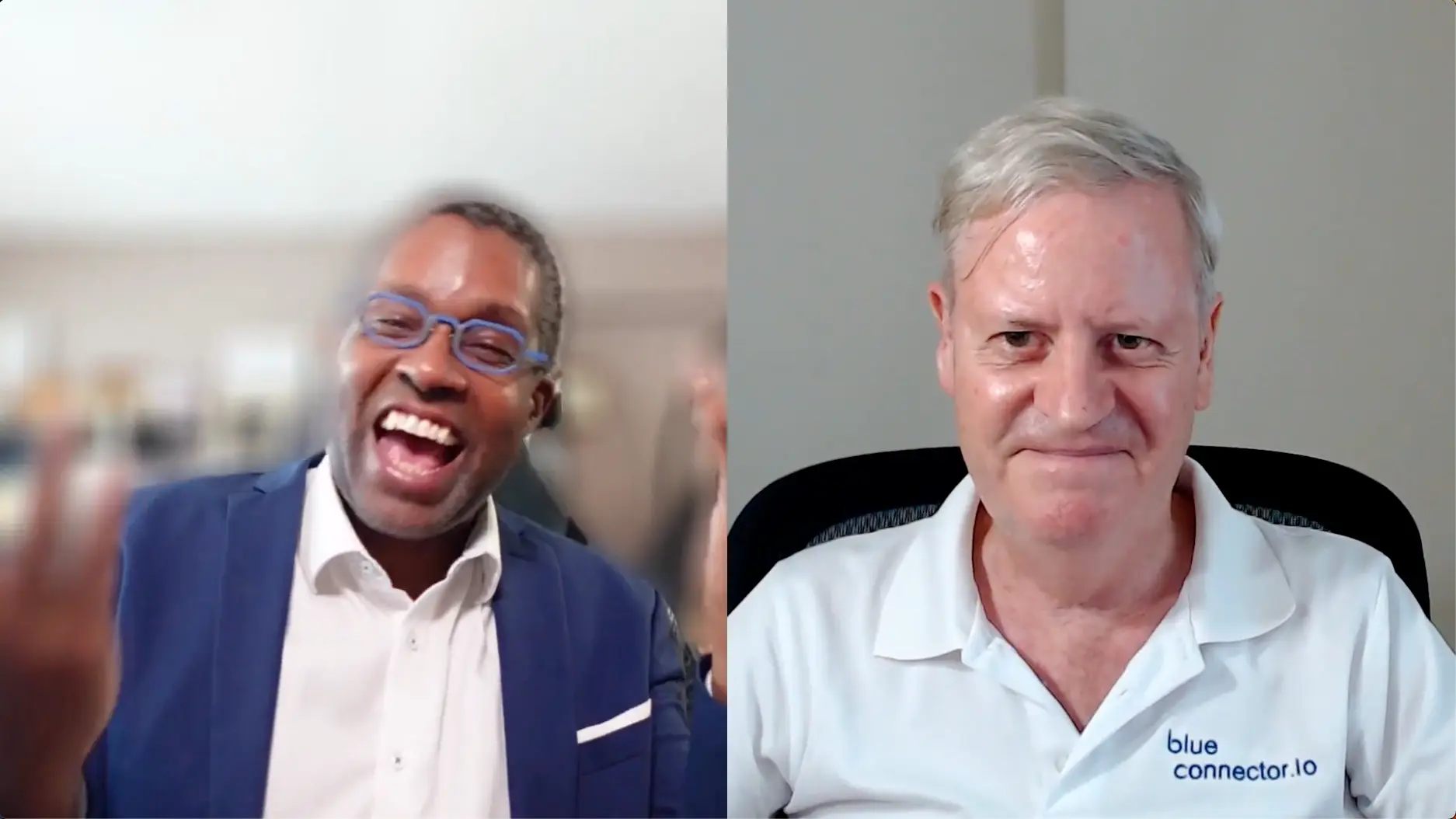
AI's Role in Business Strategy and Customer Experience,
with Keith Carter
In this conversation, Jon Scheele and Keith Carter explore the transformative impact of AI on business strategies, customer experiences, and career development. They discuss how organizations can leverage AI to enhance customer service, anticipate market moves, and foster creativity. Keith emphasizes the importance of actionable intelligence and the human element in AI-driven interactions, while also addressing the need for individuals to adapt and innovate in their careers amidst rapid technological changes.
AI's Role in Business Strategy and Customer Experience, with Keith Carter