Your AI Agent Had Permission. It Still Got It Wrong
— with Aditi Sawhney, Mastercard
Aditi Sawhney is Senior Vice President of Security Solutions at Mastercard in Asia Pacific, where she sees how fraud plays out across one of the world's largest payment networks.



You asked your agent for a red shoe. It bought a blue one.
Nothing was hacked. The agent had the right credentials and the right permissions, and every step it took was authorised. It still did something nobody wanted. Aditi Sawhney, Senior Vice President of Security Solutions at Mastercard in Asia Pacific, uses that example to make a point the payments industry is only starting to work through: as agents take on more autonomy, the security question shifts from "who has access?" to "is this what the person actually meant?"
Her answer has three parts: what an agent needs before anyone should trust it to act, why the fraud tools built for people won't catch the agents that go wrong, and what an enterprise has to have in place before it lets agents loose inside its own systems.
Permissions are not intent
Today's payment security rests on solid foundations — tokenisation, authentication, fraud detection. Agents add a layer those foundations were never designed for. An agent can be given permissions and guardrails, and still act outside what the person intended.
Sawhney breaks trust in an agent into a chain. First, identity: who is this agent, who does it represent — a consumer, a business, another agent — and what authority has it been given? Then intent: what did that person actually ask for, and does that intent travel with the agent through every step of the transaction? Then controls that compare the outcome with the intent. When they don't match, traceability: the ability to find exactly where it broke down. And underneath all of it, intelligence about how agents behave, so a legitimate agent can be told apart from a rogue one.
Mastercard's Agent Pay framework is built on the same five elements: identity, intent, controls, execution and intelligence. The important word is intent. Most of today's infrastructure can check a credential. Very little of it can check what the person who handed it over actually agreed to.
Why fraud tools built for humans won't catch rogue agents
Card fraud detection leans heavily on behaviour: where a card is used, how often, at what time of day. Agents break those signals. They make purchases in the middle of the night. They make several in a row. Velocity checks — a staple of fraud detection — stop meaning much, because, as Sawhney puts it, "agents can be persistent."
And a malicious agent needn't look different from a legitimate one. It can copy what fraudsters already do. What separates the two is not behaviour but verifiability: can you verify the agent's identity, the intent behind the transaction, and the permissions it holds? A legitimate agent can prove all three. A malicious one can't.
That's also why existing identity standards fall short. OAuth scopes, API keys and roles protect a credential. They say nothing about what the person meant. Mastercard's answer is Verifiable Intent, developed with Google and now contributed to the FIDO Alliance, so that a cryptographic record of what the person approved can travel with the transaction to the merchant, the network and the issuer. Without it, many platforms take the only safe option available today: decline all agent activity.
(How those standards fit together — and which bodies are writing them — is the subject of a companion explainer.)
Inside the enterprise: start narrow
The same logic applies when an organisation deploys agents internally — in procurement, payment operations or customer service. Sawhney's three steps will be familiar to anyone who has run an access-control programme, and that's the point:
- Identity. Who in the organisation is responsible for this agent, what authority have they given it, and what function does it represent?
- Zero trust. Start with the narrowest possible set of actions, test the edge cases — there will be many — and widen the agent's authority only once it has earned it.
- Traceability. Know every agent running across the enterprise, what authority each has, and be able to trace what happened when something goes wrong.
All three assume you know where AI is being used in the first place. Shadow AI makes every one of them impossible. Governance, she argues, has to be built in while AI is being developed and tested, not added afterwards.
Who carries the liability?
When an authorised agent buys the wrong thing, who pays? The rules are still being written, and Sawhney is careful not to pre-empt them. Her point is a more practical one: people will delegate to agents only when they're confident that if something goes wrong, they can see what broke and get it put right — the same recourse they expect from any other transaction. Until that clarity exists, adoption will stay restricted, on the consumer side and the merchant side alike.
It also means not every transaction should be handed to an agent. Low-risk purchases that consumers are happy to delegate are where agentic commerce brings convenience. The complex ones, where judgement matters, are where people will want to stay in the loop.
What a CISO in Asia Pacific should put in place this year
Asked what she'd prioritise as a chief information security officer in the region over the next twelve months, Sawhney names three things:
- AI-powered defence. AI is increasing the speed of attacks, so defence has to be AI-powered too — and above all, intelligence that cuts the noise. You might know there are 50,000 vulnerabilities; what matters is knowing which 1% to patch first.
- Governed, secured AI use. Every agent in the organisation has a clear identity, a zero-trust approach to its authority, and an audit trail.
- The fundamentals, and your vendors. Most breaches still come from fundamentals that haven't been fixed — patching, data security. And your vendors are using AI too, so third-party risk management needs continuous monitoring, not an annual questionnaire.
None of these is a CISO's job alone. Cyber risk is business risk, and the governance of agents is cross-functional: it needs the AI and data officers, and the business, at the table.
“If an agent does not perform in line with intent, first, can you track that? Can you trace that?”
— Aditi Sawhney
Key moments
- 1:58 “Is that agent not just acting within permissions, but actually executing on the intent?”
- 7:30 Why velocity checks fail: “agents can be persistent”
- 8:45 Without verifiable intent, many platforms “just decline all agentic activity”
- 9:28 Verifiable intent with Google, under the FIDO Alliance
- 11:36 Inside the enterprise: start really narrow
- 13:43 “You said you wanted a red shoe and it purchases a blue one”: can you see what broke?
- 14:28 A CISO's three priorities for the next twelve months
Aditi Sawhney is Senior Vice President of Security Solutions at Mastercard in Asia Pacific. Connect with her on LinkedIn.
Go deeper
Who pays when an authorised agent gets it wrong?
If an agent you set up buys the wrong thing, today's rules most likely treat it as your payment. What that means for banks in Asia Pacific.
From walled gardens to shared rules: how the agent-payments ecosystem is coming together
Visa, Mastercard, Google and the FIDO Alliance are converging on one way to prove an agent is legitimate and acting on real intent.
See more about the tech of business
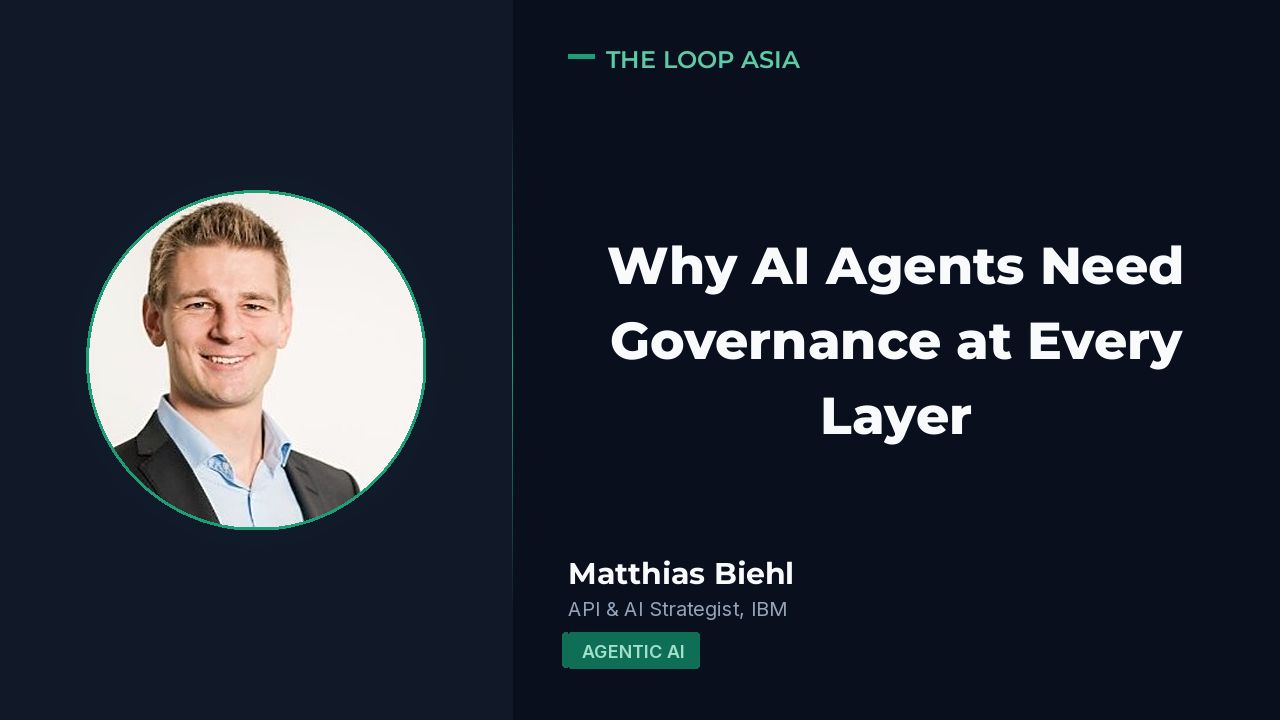
Why AI Agents Are Stuck in Prototype,
with Matthias Biehl, IBM
Matthias Biehl breaks down the governance architecture that gets AI agents from prototype to trusted, customer-facing production.
Why AI Agents Are Stuck in Prototype, with Matthias Biehl, IBM
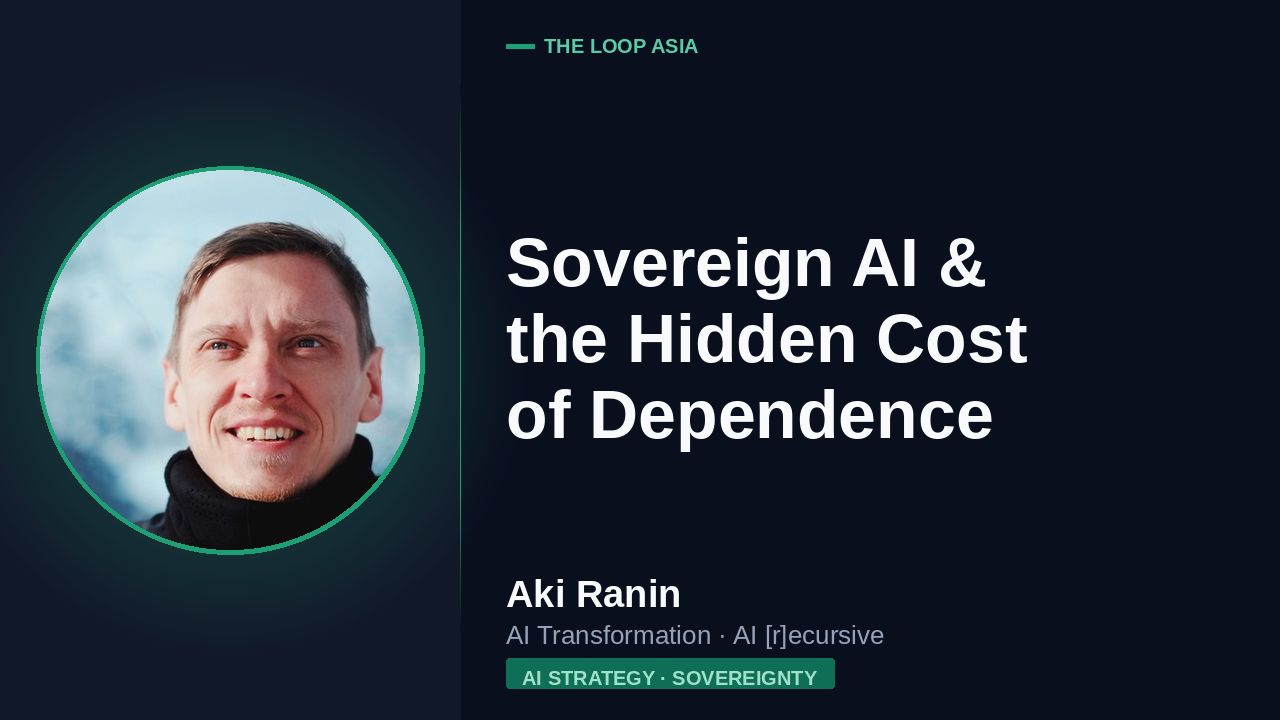
Sovereign AI and the Hidden Cost of Dependence,
with Aki Ranin
What sovereign AI actually means in practice: not a regulatory concept, but a question of operational risk.
Sovereign AI and the Hidden Cost of Dependence, with Aki Ranin
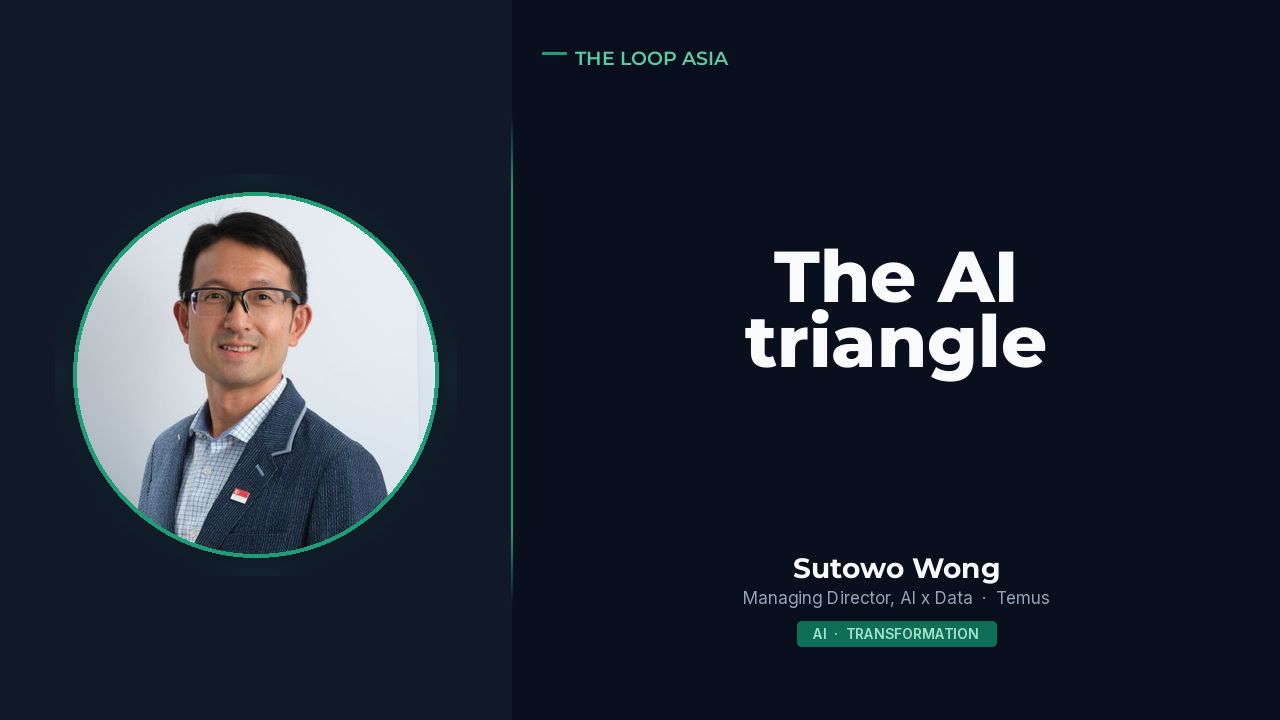
The AI Triangle: Why Most Enterprise AI Programmes Fail,
with Sutowo Wong, Temus
The three conditions any enterprise AI programme must satisfy at once: transformative, sovereign and fast.
The AI Triangle: Why Most Enterprise AI Programmes Fail, with Sutowo Wong, Temus