Sovereign AI and the Hidden Cost of Dependence
— with Aki Ranin, [r]ecursive
Aki Ranin is a two-time founder, AI advisor, and published author who has focused exclusively on machine learning and AI since 2016. He co-created the "Usable AI" transformation framework, advises startups, corporates, and VC funds on AI strategy, and serves as Affiliate Faculty in AI and ML at Singapore Management University.



Aki Ranin has spent years helping organizations think clearly about AI strategy, and right now he is focused on a problem most companies are only beginning to notice: the deeper you embed AI agents into your business, the more exposed you become to providers you do not control. In this episode, recorded shortly after his keynote at apidays Singapore 2026, Aki walks through what sovereign AI actually means in practice — not as a regulatory concept, but as a question of operational risk. If your agents can be switched off without warning, if you cannot quantify hallucination rates, if you do not own the code, you do not own your business.
Sovereign AI is no longer an abstract policy concern — it's a supply chain problem that's landed in every organisation running AI agents. Aki Ranin, keynote speaker at apidays Singapore 2026 and returning guest on the show, makes the case that the same fragility exposed in physical supply chains during COVID is now embedded in how companies consume AI: concentrated around a handful of closed model providers, subject to US export controls, and priced in ways that are quietly inflating.
The Dependency Problem Is Already Here
Aki draws a direct line from BMW stripping chips out of washing machines during the pandemic to a 40-person startup that got accidentally banned from the Anthropic API and was out of business for 24 hours. The parallel is precise: over-optimised supply chains fail catastrophically under shock. When your business logic runs inside someone else's agent infrastructure, you don't just lose a tool — you lose the agent itself, the accumulated behaviour, and potentially the IP. The question of who owns the agents when you stop working with a vendor is one most organisations haven't asked yet.
The Sovereign AI Stack
Aki frames the response not as a single decision but as a gradient of controls matched to data sensitivity and business criticality:
- Tier 1 — Public tools, non-sensitive tasks: Free or consumer AI tools are acceptable where inputs are public information and there is no corporate data involved. Research, general ideation, public content.
- Tier 2 — Paid subscriptions with data controls: Any use case touching email, CRM, HR data, or internal documents requires paid enterprise plans at minimum. Free-tier tools retain training rights over uploaded content.
- Tier 3 — Private cloud instances via API: AWS Bedrock, Azure, or GCP deployments of frontier models give organisations private inference with no logging by the provider. Still dependent on external models, but with meaningful controls.
- Tier 4 — Open models on managed infrastructure: Models like Qwen or Gemma running on cloud or co-located hardware. Lower cost, more auditability, task-specific tuning possible.
- Tier 5 — Open models on owned hardware: On-premises or edge inference for the most sensitive agents. Aki points to Singapore's Foreign Minister Vivian Balakrishnan running a local model on a Raspberry Pi as a signal that this is accessible beyond purely technical users.
The Shopify Cost Compression Case
Aki references a Shopify case study as the practical model for how to approach the economics. Starting from a frontier model costing $5 million per year for a single use case, they progressively optimised down to a 70-billion-parameter open model at approximately $70,000 per year — a 70x cost reduction. The method: define the use case clearly, build evaluation sets (questions and answers that measure whether the model is doing the right or wrong thing), and step down the model stack until quality degrades. The principle Aki articulates is minimum viable model — the smallest, cheapest model that clears your measurable accuracy threshold for that specific task.
Why Evals Are the Prerequisite for Any Agentic Deployment
The capability most organisations are missing isn't access to better models — it's the ability to measure what their models are doing. Aki is direct: if you can't give a CFO or CIO a hallucination rate for an agent you're deploying to automate a business process, the conversation ends there. Off-the-shelf agent tools like Claude or OpenAI-native solutions don't provide this. Building it requires defining the use case, curating evaluation sets, and repeating the optimisation loop per agent. An average company, in Aki's estimate, has at least 100 agentic use cases to work through.
AI Inflation and the Token Economy
Aki introduces the concept of AI inflation: the dynamic where newer models consume more tokens, at higher prices, to perform the same tasks. Google's Gemini 2.5 Flash — nominally a lightweight model — now costs roughly four times its predecessor and sits at the price point of the previous Pro tier. If organisations don't actively optimise down the model stack, they face a compounding cost spiral as agents become embedded in core business processes. Aki's framing: what may matter competitively in future is not capital alone, but access to compute and token quality.
Where to Start
Aki's recommended sequence for organisations that haven't formalised an AI strategy:
- Audit current usage: Most companies have employees on individual or team plans across multiple AI tools, often on personal or company credit cards. Catalogue what is actually in use before writing policy.
- Establish a tiered data policy: Define which categories of data can go into which tools. Public information and non-sensitive research sit in one bucket; anything touching corporate systems requires paid enterprise controls at minimum.
- Decide on agent ownership now: Before engaging vendors to build or manage agents, determine whether the resulting code and agent behaviour will be owned by the organisation. Managed agent services from Anthropic, OpenAI, or GCP may not guarantee portability.
- Form a multidisciplinary steering group: AI policy decisions are business transformation decisions, not IT decisions. Aki argues they belong at board level — framed around geopolitical exposure, regional provider options, and long-term strategic assumptions, not just tool selection.
Aki Ranin is a two-time founder, AI advisor, and published author who has focused exclusively on machine learning and AI since 2016. He co-created the "Usable AI" transformation framework, advises startups, corporates, and VC funds on AI strategy, and serves as Affiliate Faculty in AI and ML at Singapore Management University.
Follow Aki's work on Substack, especially his article "Not your AI, not your business" — https://recursivelabs.substack.com/p/not-your-ai-not-your-business
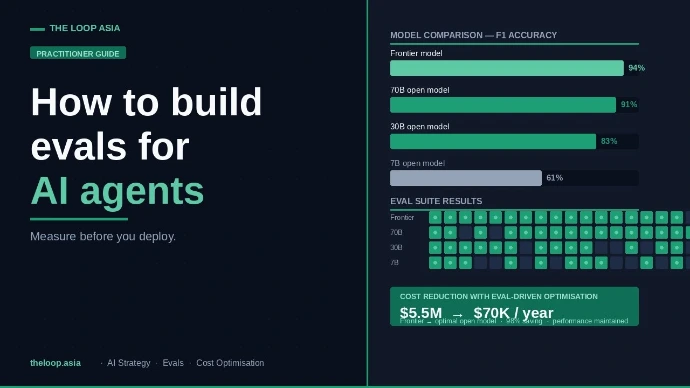
How to Build Evals for AI Agents — A Practitioner's Guide
Before deploying an AI agent in your organisation, one question will end the conversation if you can't answer it: what is the hallucination rate? This guide explains what evals are, why they matter, and how to build them from scratch.
See more about the tech of business
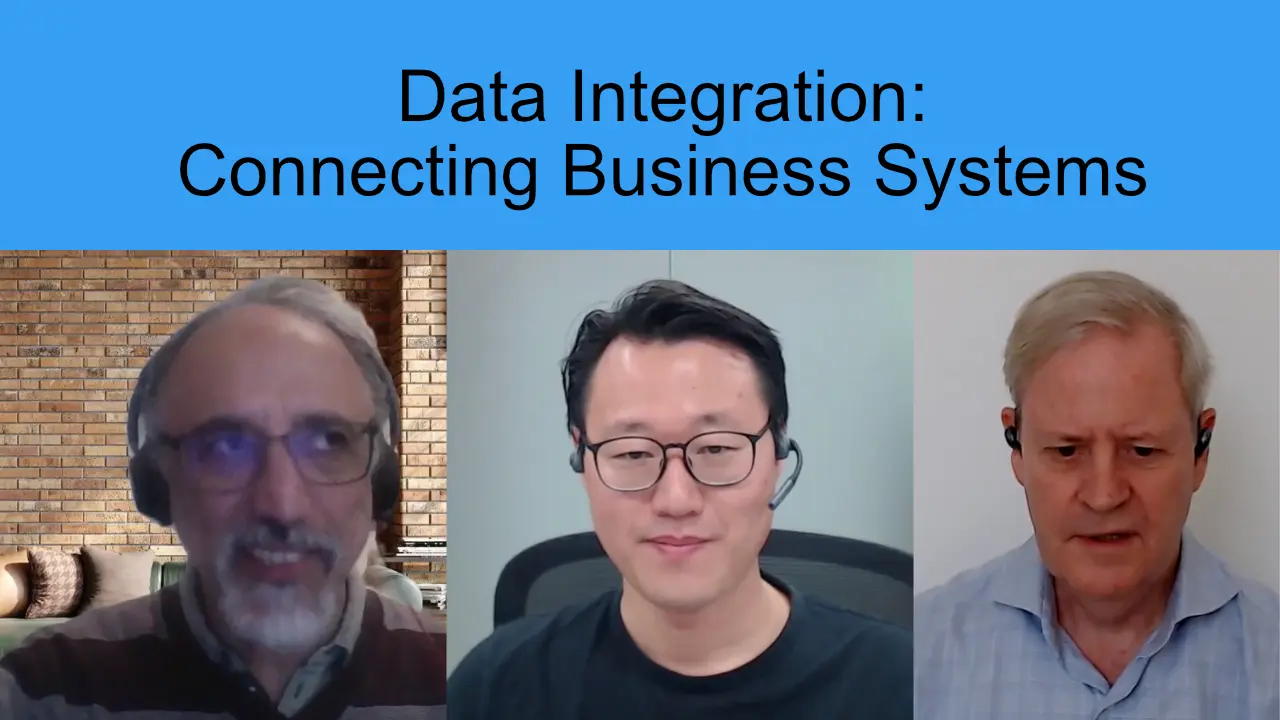
Data Integration: Connecting Business Systems,
with Fethi Rabhi and Alan Hsiao
In this conversation, Jon Scheele, Fethi Rabhi, and Alan Hsiao discuss the complexities of data integration, particularly in the context of e-invoicing. They explore the challenges faced by businesses in automating invoicing processes, the importance of standards like PEPPOL, and the limitations of current systems. The discussion also touches on the future of invoicing, automation, and the potential impact of AI and blockchain technology on business processes.
Data Integration: Connecting Business Systems, with Fethi Rabhi and Alan Hsiao
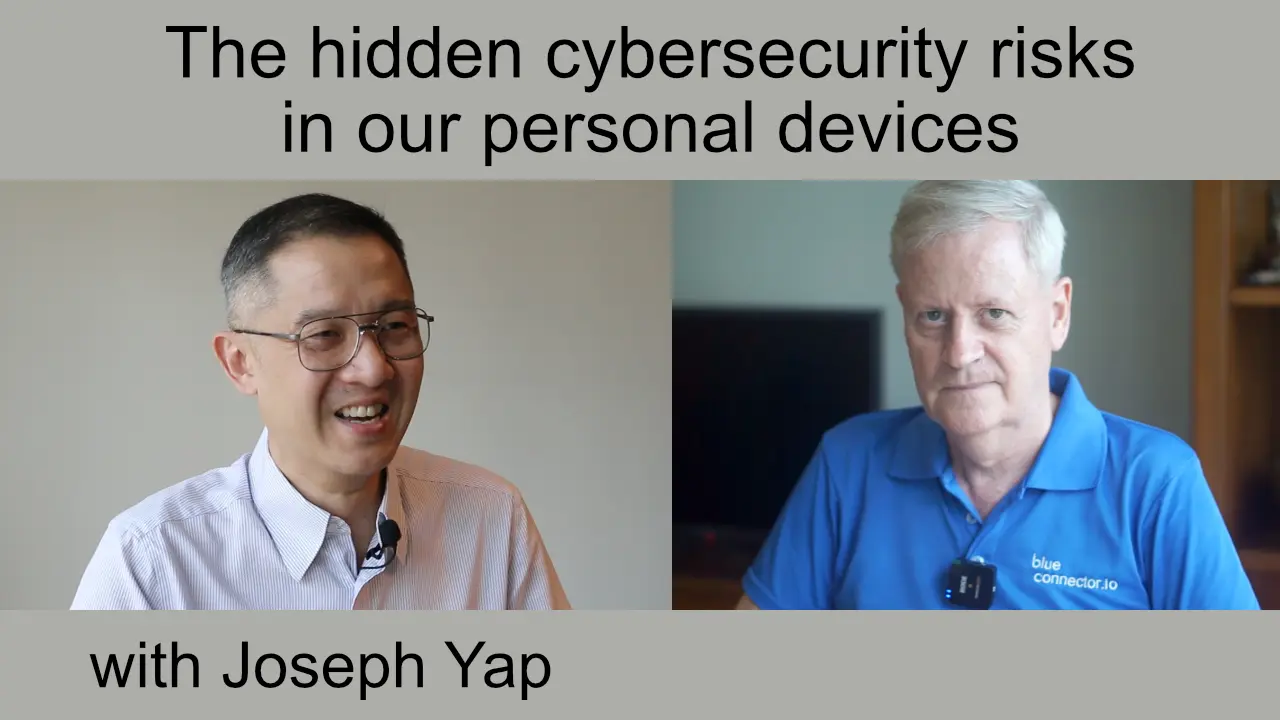
The Hidden Cybersecurity Risks in Our Personal Devices, with Joseph Yap
In this episode, we dive into the world of home automation and the hidden security risks that come with it. Join us as Joseph Yap, a cybersecurity expert, shares his journey from a personal interest in smart homes to uncovering alarming vulnerabilities in everyday devices. Discover how convenience often comes at the cost of security, and learn practical steps to protect your home network from potential threats. Tune in to understand why your smart fridge might be more than just a kitchen appliance and how to safeguard your digital front door.
The Hidden Cybersecurity Risks in Our Personal Devices, with Joseph Yap

AI's Role in Business Strategy and Customer Experience,
with Keith Carter
In this conversation, Jon Scheele and Keith Carter explore the transformative impact of AI on business strategies, customer experiences, and career development. They discuss how organizations can leverage AI to enhance customer service, anticipate market moves, and foster creativity. Keith emphasizes the importance of actionable intelligence and the human element in AI-driven interactions, while also addressing the need for individuals to adapt and innovate in their careers amidst rapid technological changes.
AI's Role in Business Strategy and Customer Experience, with Keith Carter