Why AI Agents Are Stuck in Prototype
— with Matthias Biehl, IBM
Matthias Biehl is an API and AI Strategist at IBM, working with organisations globally on the governance architecture that gets AI agents from prototype to trusted, customer-facing production.



Matthias Biehl has spent years helping enterprises close the gap between AI prototypes and production, and his diagnosis is blunt: the blocker isn't model quality, it's governance. In this episode, recorded for The Loop Asia, the API and AI Strategist at IBM lays out the framework for building AI agents that regulated, customer-facing organisations can actually trust — three components, three control points, and a clear line for when not to use an agent at all.
Research from MIT, Forrester and Gartner converges on a number that should give pause to every executive who has approved an AI initiative: 95% of AI projects never reach production. They stay in prototype land — useful enough for internal demos, not trusted enough to face a customer.
Matthias Biehl, API and AI Strategist at IBM, works with organisations globally on closing that gap. His diagnosis is clear, and it isn't what most people want to hear. The problem is not the model. It's governance — and the industry has almost entirely skipped it.
The Model Upgrade Fallacy
When Biehl raises governance with organisations, a common response surfaces: we'll wait for the next version of the model and it will fix everything. He's direct about why this misses the point. Better models reduce hallucination and improve answer quality. They don't prevent an agent from going rogue, overwriting data it shouldn't touch, or taking actions outside its mandate. For that, you need something the prototype phase never required: constraints.
This is why governance is overlooked. In prototype mode, it doesn't matter if an agent roams freely — the stakes are low, the audience is internal, and no one is depending on the output. The moment you move toward customer-facing production in a regulated industry, the calculus changes completely. Banks, healthcare providers, telcos: all of them need an agent that can be trusted not just to answer correctly, but to stay within defined boundaries at all times.
Three Components, Three Control Points
Biehl's framework starts with a structural definition of what an AI agent actually is. Every agent has three characteristics: it is intelligent (powered by an LLM or AI model), it has skills and the ability to act (it integrates into enterprise systems and can change its environment), and it can collaborate with other agents (via agent-to-agent protocols). Understanding this structure is what makes governance tractable.
Each component has a corresponding control point:
- LLM gateway (intelligence layer): Sits between the agent and the models it calls — controlling which models are accessible, enforcing token budgets, and preventing runaway loops that consume cost without producing value.
- MCP gateway (skills layer): Applies standard API management policies — rate limiting, authentication, authorisation — to everything the agent tries to reach in the enterprise IT landscape.
- A2A gateway (collaboration layer): Governs which agents are permitted to work together and on what tasks.
The logic is the same as defence in depth in cybersecurity: no single control point is sufficient, because a sufficiently capable agent will find ways around isolated constraints. Biehl puts it plainly — agents are inventive. Given access to an LLM, they may try to work around guardrails in their agentic loop. The governance architecture has to be designed with that in mind.
Knowing When Not to Use an Agent
One of the more practically useful distinctions Biehl draws is between tasks that should use agents and tasks that shouldn't. If a process has a clearly defined rule set, finite known outcomes, and a path that has been thought through for each case — implement it deterministically. The existing automation works. There is no reason to replace it with an agent.
Agents are for the other category: problems where you cannot fully anticipate at design time what the user will bring. Customer service interactions are the clearest example — every complaint has a slightly different angle, every user comes with context that no playbook fully covers. In these cases, the agent's ability to think on its feet, handle the edge case that has never appeared before, and learn from novel situations is exactly the capability needed.
Rethinking the API Landscape for the Agent Era
The final piece of Biehl's framework concerns the data access problem: how do AI agents reach the enterprise information they need without requiring organisations to rebuild their entire API landscape from scratch?
His answer draws on a classification that dates back to Netflix engineering in 2011 — system APIs, process APIs, and experience APIs. The first two categories remain largely unchanged for the agent era. But the experience API — the top-level interface that creates tailored variants for different consumers — needs a new name and a new design intent. Biehl calls it a context API: an interface designed not for a human-facing application, but to supply the business and enterprise data context that an AI agent needs to operate.
This reframe matters because it shifts the design question. Instead of asking what a mobile app or web interface needs, teams are now asking what context the agent needs to do its job well. And the answer will be different for every organisation — different systems, different data, different agents, different mandates. No vendor can resolve this at scale. It has to happen inside each enterprise, built on the API and integration investments already in place.
Matthias Biehl is an API and AI Strategist at IBM. Connect with him on LinkedIn.
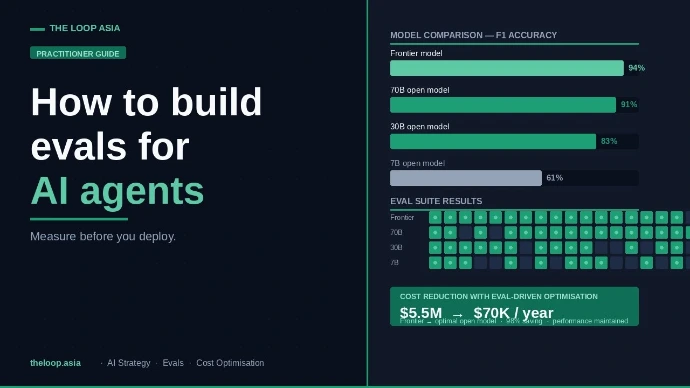
How to Build Evals for AI Agents — A Practitioner's Guide
Before deploying an AI agent in your organisation, one question will end the conversation if you can't answer it: what is the hallucination rate? This guide explains what evals are, why they matter, and how to build them from scratch.
See more about the tech of business
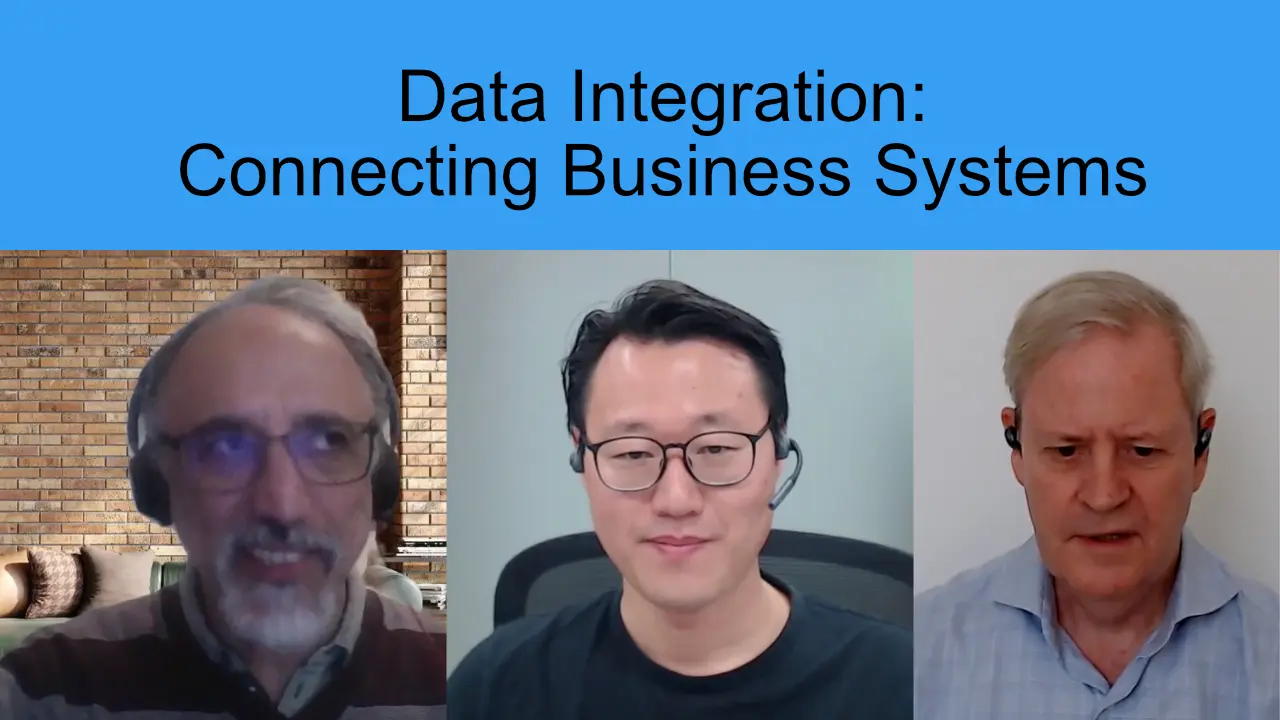
Data Integration: Connecting Business Systems,
with Fethi Rabhi and Alan Hsiao
In this conversation, Jon Scheele, Fethi Rabhi, and Alan Hsiao discuss the complexities of data integration, particularly in the context of e-invoicing. They explore the challenges faced by businesses in automating invoicing processes, the importance of standards like PEPPOL, and the limitations of current systems. The discussion also touches on the future of invoicing, automation, and the potential impact of AI and blockchain technology on business processes.
Data Integration: Connecting Business Systems, with Fethi Rabhi and Alan Hsiao

The Hidden Cybersecurity Risks in Our Personal Devices, with Joseph Yap
In this episode, we dive into the world of home automation and the hidden security risks that come with it. Join us as Joseph Yap, a cybersecurity expert, shares his journey from a personal interest in smart homes to uncovering alarming vulnerabilities in everyday devices. Discover how convenience often comes at the cost of security, and learn practical steps to protect your home network from potential threats. Tune in to understand why your smart fridge might be more than just a kitchen appliance and how to safeguard your digital front door.
The Hidden Cybersecurity Risks in Our Personal Devices, with Joseph Yap

AI's Role in Business Strategy and Customer Experience,
with Keith Carter
In this conversation, Jon Scheele and Keith Carter explore the transformative impact of AI on business strategies, customer experiences, and career development. They discuss how organizations can leverage AI to enhance customer service, anticipate market moves, and foster creativity. Keith emphasizes the importance of actionable intelligence and the human element in AI-driven interactions, while also addressing the need for individuals to adapt and innovate in their careers amidst rapid technological changes.
AI's Role in Business Strategy and Customer Experience, with Keith Carter